Language games
Language games practice three everyday skills: reading for the point, writing with fewer words and choosing the clearest word to say.
Reading, writing and speaking · 9 games
Where it shows up
Finding the one line that matters in a long email
Cutting a message down before you send it
Choosing a word that says exactly what you mean
Every language game
Free to play here, with no account. About two minutes each.
- Reading
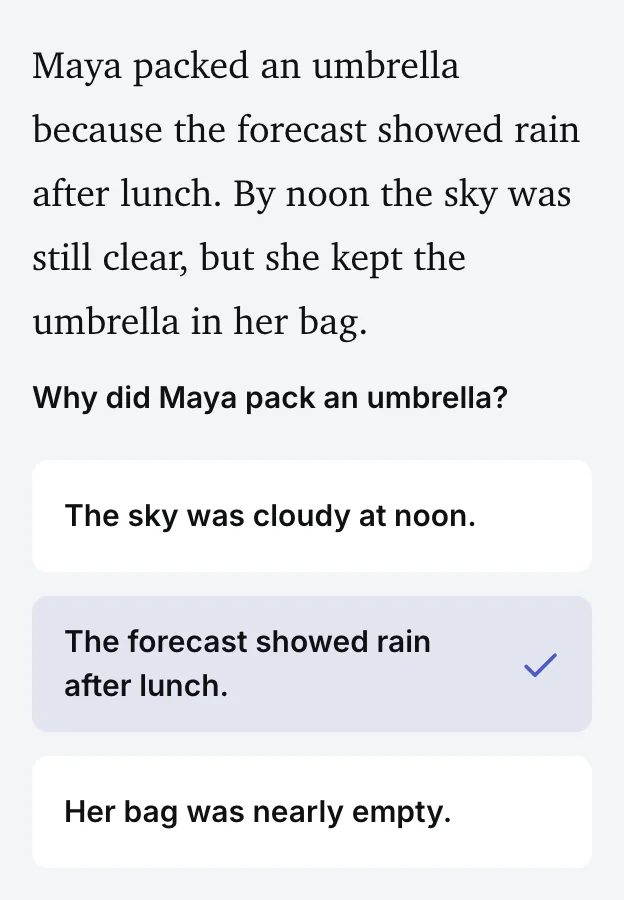
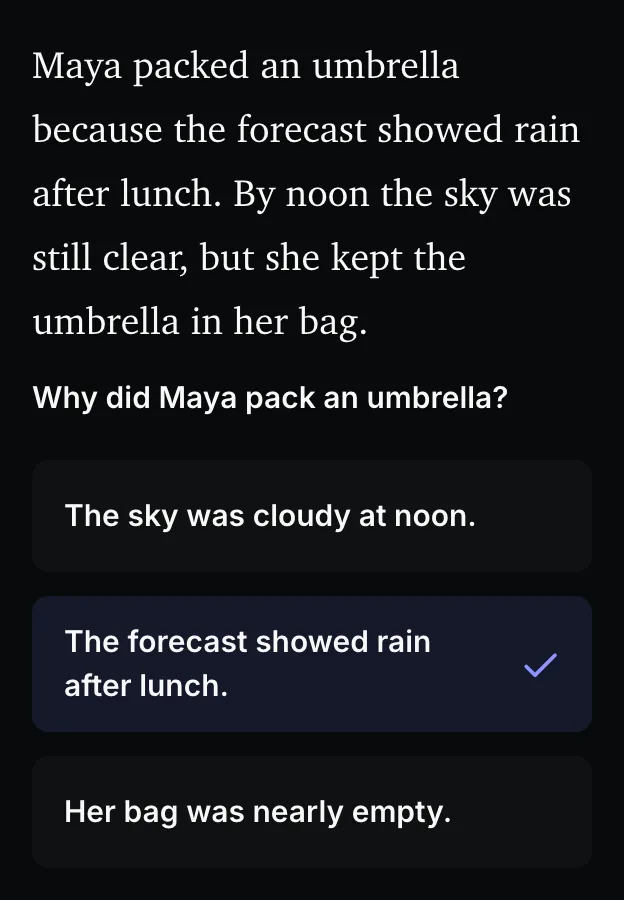
Passage Scan
Reading comprehension
Find the answer the passage supports.
 Writing
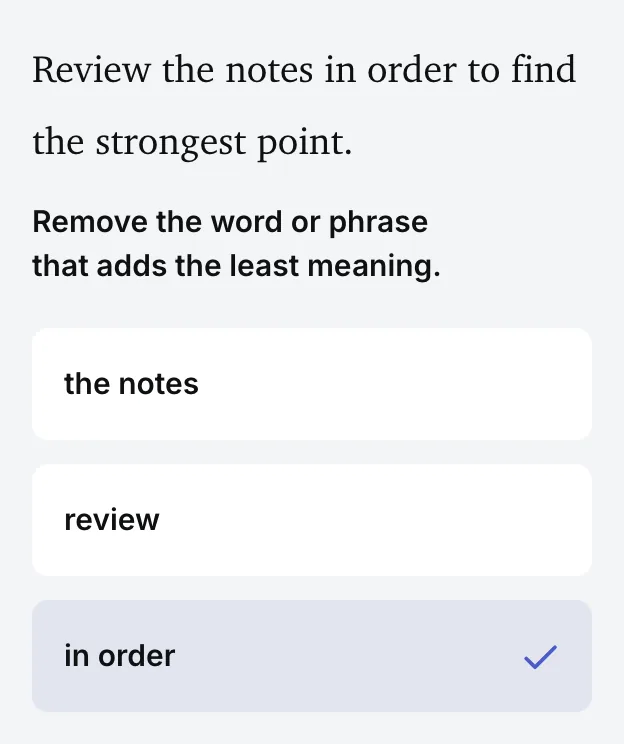
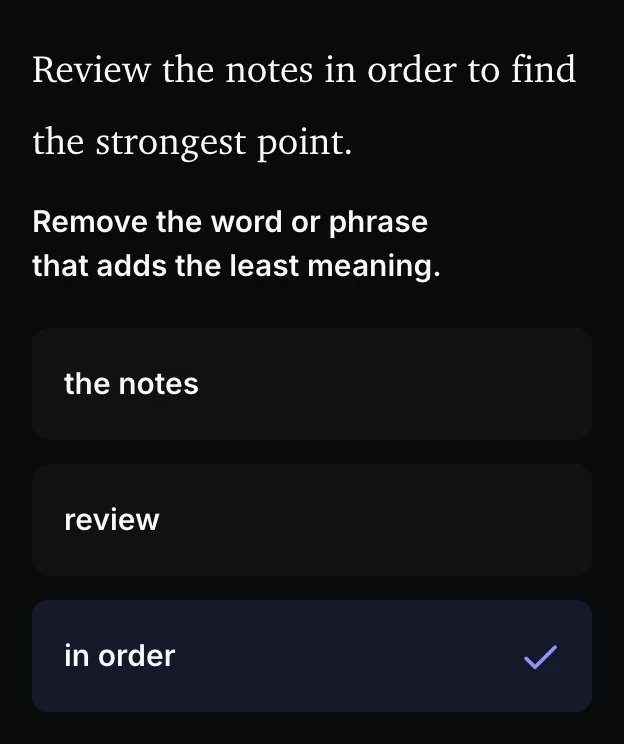
Concise Cut
Concise writing
Trim a sentence without changing its meaning.
 Speaking
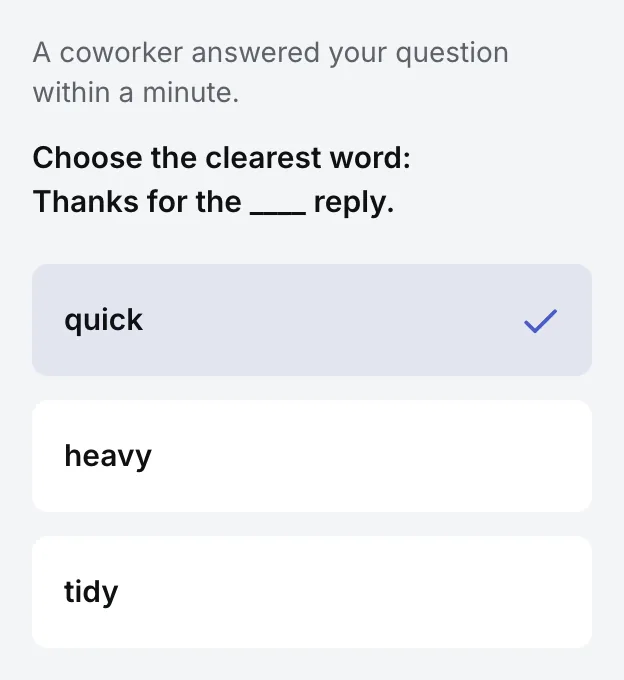
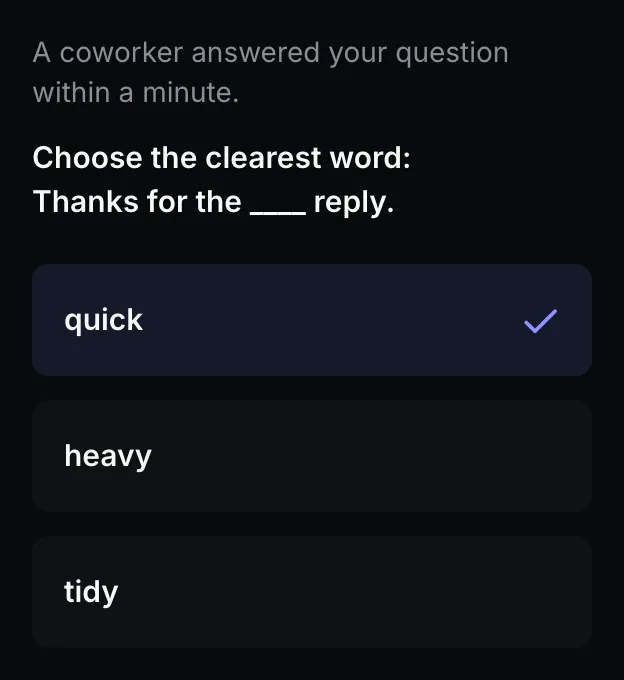
Word Precision
Vocabulary
Pick the word that sounds clearest out loud.
- Reading
Synonym Pick
Vocabulary
Find the words that mean the same as the word on the card.
- Writing
Word Unscramble
Vocabulary
Rearrange the letters into the word that fits the clue.
- Reading
Root Finder
Vocabulary
Learn the word parts that many longer words are built from.
- Writing
Word Starts
Verbal fluency
Think of as many words as you can that begin with the same three letters.
- Reading
Word Fix
Reading comprehension
Spot the word that does not belong in a sentence and swap in the one that does.
- Writing
Word Scale
Vocabulary
Put words in order from least to most to feel the small differences between them.
Questions
- What do the language games cover?
- Reading games ask you to find the supported answer in a short passage. Writing games ask you to cut or order words. Speaking games ask which word would sound clearest out loud.
- What kind of text do they use?
- The passages are plain everyday content: emails, notices, lists and short conversations. There are no trick questions.
- Is Think Sharp a medical tool?
- Think Sharp is for cognitive practice and habit building. It is not a medical device and does not diagnose, treat, cure, or prevent any medical condition.